Monday, April 1, 2013

The Altar Called Ed


        My son and daughter came to church a few Sundays ago. Sister Julie Davis had written a song and Sister Jeannie Lyle and I were prepared to perform it that morning, but there wasn’t time. So Sister Jeannie and I gave a command performance for them in the choir room following the service. The lyrics to the song would not make sense to someone not familiar with the biblical parallels in the bible between the Israelites’ miraculous crossing of the Red Sea (salvation) and their second miraculous crossing of the Jordan River into the Promised Land (sanctification). I gave my best attempt to explain these parallels to Jeremy and Ashleigh prior to performing the song. The lyrics are as follows:
Sanctified
[Chorus:] I’ve settled down in the land of Canaan
Now my soul has ceased from wan-drin’
Now I’m home.
The veil is rent and I’ve crossed Jordan
Now my joy is overflowin’
Now I’m home, oh, I’m home.
[Verse 1:] He did away with Adam’s seed
Cleansed me from all carnality
From orphaned child to royal son
Lord, not my will but thine be done
[Verse 2:] He did away with Adam's seed
Cleansed me from all carnality
From orphan child to royal son
Lord, not my will but Thine be done

[Verse 3:]  And with it comes a lasting peace
More grace, more power, stability
He calmed the storm of inward strife
When I committed my whole life

                I have been reading through the book of Joshua and I came across a verse that I don’t know how I’ve missed before. It is verse 34 of chapter 22, “And the children of Reuben and the children of Gad called the altar Ed: for it shall be a witness between us that the Lord is God.” I just had to investigate this altar named Ed. The word Ed is the transliteration of the Hebrew word for witness. I found out that this altar is not a good thing. I’ll try to present the story in a way that I, even I, might understand it.
                After 40 years in the wilderness the Israelites approached the land that God had promised them. Certain ones scoped out the land on the wilderness side of the Jordan and felt it was good enough for them and for their cattle. So they told Moses they did not want to cross the Jordan, that they were satisfied with whatever would await them on this side. Here is Moses’ reply:

Numbers 32:6-7, 20-22
6 And Moses said unto the children of Gad and to the children of Reuben, Shall your brethren go to war, and shall ye sit here?
And wherefore discourage ye the heart of the children of Israel from going over into the land which the Lord hath given them?
                Moses gives them the conditions on which they should inherit the land east of the Jordan in verse 20:
20 And Moses said unto them, If ye will do this thing, if ye will go armed before the Lord to war,
21 And will go all of you armed over Jordan before the Lord, until he hath driven out his enemies from before him,
22 And the land be subdued before the Lord: then afterward ye shall return, and be guiltless before the Lord, and before Israel; and this land shall be your possession before the Lord.
                So the tribes of Gad and Reuben and half of the tribe of Manasseh fought with the rest of the Israelites but they never possessed any part of the Promised Land. They never accepted all that God had offered to them. They were very much like Lot, who decided the land near the wicked city of Sodom was okay to settle on because his cattle (his wealth) would prosper there.
                When we come to the passage in Joshua, we find that these folks have constructed an altar, but it is not the altar God had instructed the Israelites to build in Canaan land. They even admit that it is only a cheap imitation and that they never intend to make sacrifices on it. They say they will simply use it as a witness to their unity. It will simply be something to look at.
Many who profess to be Christians are content with a watered-down lukewarm experience. Many churches have very impressive altars. But many professing Christians have settled for less than all God has to offer, and less than what God expects from them. To them salvation is like an all-you-can-eat buffet. “I’ll take this and I’ll take that, but I don’t want any part of those vegetables. The singing is nice but ain’t nobody gonna tell me that God cares how I dress.” Some may even add things that were not offered. I used to carry around a small bottle of Tabasco sauce in my pocket in case of “emergency.” They add things to their Christian profession that God never intended, such as forbidding priests to marry.
We need to desire all that God has for us. Only in being truly saved (having crossed the Red Sea into the wilderness) and being truly sanctified (having crossed the Jordan River and settled down in the land of Canaan) can we have true unity with each other.

Saturday, March 16, 2013

Perfect Pitch


Psalm 40:3
And he hath put a new song in my mouth, even praise unto our God: many shall see it, and fear, and shall trust in the Lord.
                Okay, I know what some of you are thinking, so I’ll get it out of the way first. One definition of having perfect pitch is having the ability to throw an accordion into a dumpster without hitting the sides so that it lands on a pile of banjos!
                There are many legitimate definitions of perfect pitch. I have been told I have perfect pitch. It was discovered when I was in junior high when people found out I could tell what key a song was being played in or could tell the name of a note that was played on a piano. This made me popular at parties: “Hey, what note am I singing?” and that sort of thing. Disclaimer: that does not mean I can tell if a note is perfectly in tune. It also does not mean I am incapable of enjoying music that is not played or sung perfectly in tune. I can certainly enjoy a “joyful noise.”
If you can picture twelve buckets representing the twelve notes of the chromatic scale, I can identify which bucket the note belongs in when I hear it, but I could not tell you how far in the center of the bucket it is.
There has probably been only one drawback to my having perfect pitch, or whatever it is I have: I once owned a piano that was a half-step out of tune. I had no problem playing it if I was reading music, but if I tried to play by ear I found it impossible because the note I was trying to play was not the same note I was hearing.
                Just as God has a standard, there is a musical standard that has been adopted in our culture. The note A above middle C is tuned to 440 Hz (hertz, or cycles per second), which is the standard that was informally adopted by the American music industry in 1926 and made official in 1936 by the American Standards Association, whatever that is. Europe outside of Great Britain uses a different standard, but we won’t go there (we obviously can’t fellowship with someone who has a different standard in tuning).
                So where’s the spiritual lesson in this?
I want to talk about the subject of sympathetic vibration and apply it in a spiritual sense. If you had two tuning forks and struck one, it would cause the other to vibrate. If you depressed the damper pedal on a piano and played a note on a different instrument, it would cause the corresponding string on the piano to vibrate. This also works with guitar stings or probably any stringed instrument. But this will happen only if the two are in tune with each other, if they are tuned to the A=440 hz standard. In our fellowship together, we saints can create the same effect. We can cause each other to “vibrate” in unison to one another. This is one important reason we are not to forsake the assembly of ourselves together. A card or a word of encouragement can cause a sympathetic vibration. A song or a testimony in church can cause a sympathetic vibration.
                An orchestra or group of players must tune themselves to each other before they can play beautifully together. Around the church you’ll notice the musicians tuning themselves to the piano, which has been tuned to the A=440 hz standard.
                If we are tuned to God’s standard, to God’s perfect pitch, we can have sweet fellowship and make sweet music together. If we refuse to be tuned we are simply making a lot of noise.

Thursday, March 14, 2013

Some Trust in Horses


6-9-12
Psalm 20:7-8
7 Some trust in chariots, and some in horses: but we will remember the name of the LORD our God.
8 They are brought down and fallen: but we are risen, and stand upright.
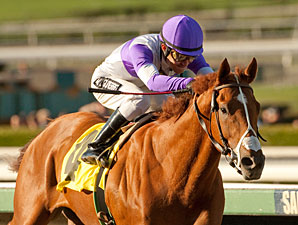
                This scripture passage was mentioned during Wednesday night’s testimonies at church. As I was reading the news the other day I was reminded of it. The horse that won the Kentucky Derby and the Preakness Stakes, I’ll Have Another, will not be racing in today’s Belmont Stakes. The horse suffered a freak injury and will be forced to retire. I’ll Have Another, then, will not win the Triple Crown (winning all three races), as some had hoped. No horse has won the Triple Crown since 1978.
                I’m sure there are many who trusted in horses this week, whether they were simply casual horse racing fans or professional gamblers, and were severely disappointed. There is a lot of money involved in training a thoroughbred horse of this caliber. At the Belmont Stakes alone $60 million was expected to be waged on and off the track, according to USA Today.  But sports injuries can force a promising athlete suddenly to seek other career options. 
                At the time this psalm was written, as it was brought up Wednesday night, there was good reason to trust in horses and in chariots. They were an important mode of transportation as well as being crucial on the battlefield.  But only by trusting in the name of the Lord can we not be disappointed. When we put all our trust in our own abilities, talents, and skills and leave God’s will out of the picture, anything can happen. I know from personal experience.  It wasn’t a sports injury and I wasn’t an athlete, but a mental injury of sorts sidelined me from a promising career.
                In other sports news this week, the National Football League was being sued by 2,000 former football players, who claim the NFL concealed the danger that would result from repeated head injuries. To this I say, “Well, duh!” Does a person who willfully rams his head repeatedly against a brick wall have the right to sue the owner of the wall after he suffers permanent brain damage? I’ve never been very athletic and I never found the urge to impress girls by ramming my head against other people. 
                Psalm 20:8 again says…
8a They are brought down and fallen:
Adam Clarke’s commentary explains it this way: “They were so confident of victory that they looked upon it as already gained. They who trusted in their horses and chariots are bowed down, and prostrated on the earth: they are all overthrown.” The verse continues…
8b but we are risen, and stand upright.
                Adam Clarke says, “We who have trusted in the name of Jehovah are raised up from all despondency; and we stand upright - we shall conquer, and go on to conquer.” As the song says, “Conquering now and still to conquer.” 
                Proverbs 3:5-6 says, “Trust in the LORD with all thine heart; and lean not unto thine own understanding. In all thy ways acknowledge him, and he shall direct thy paths.”
                It is wise to strive to do well at what we do, but let us not forget where our strength lies and Who directs our paths.

Stinky Things


4-25-12
                Our granddog  Sudo has numerous stuffed animal squeaky toys that are no longer stuffed and no longer squeak. Our dog Bailey used to be fond of such things, too, and we always referred to them as his “stinky things.” They were pretty much unrecognizable for what they once were but these dogs just love to chew on them and chase after them when you throw them. The dogs would bring them to us, all tattered and dripping with dog saliva, and we would say, “What IS this stinky thing?”
                Anyone who has ever had a cat probably knows they like to give us “presents.” What they think we should feel grateful and honored by is their leaving us a disgusting dead mouse on our doorstep.
                This morning Sudo jumped on my lap and began wagging one of her stinky things right in my face and would not stop. I pretended to be annoyed. My wife told me I should be honored, as Sudo is presenting me with her most valuable possession.
                I thought about that and I wondered whether God sees it that way when we, in good faith, try to offer our best to Him. It says in Isaiah 64:6, “But we are all as an unclean thing, and all our righteousnesses are as filthy rags.” It might have said that all our righteousnesses (or righteous acts) are as stinky things. Everything we tried to do to obtain forgiveness of sins, to obtain God’s favor, all our rites, ceremonies, and sacrifices were seen as abominable to God. It says in Psalm 40:6, “Sacrifice and offering thou didst not desire. Psalm 51:16 says, “For thou desirest not sacrifice; else would I give it: thou delightest not in burnt offering.”
                So is there any hope for us? Yes, there is. The next verse of Psalm 51 says, “The sacrifices of God are a broken spirit: a broken and a contrite heart, O God, thou wilt not despise.” In Hosea 6:6 God says, “For I desired mercy, and not sacrifice; and the knowledge of God more than burnt offerings.”
                With the righteousness of Christ that is imputed on us once we come to God with an honest and contrite heart and receive the salvation He so generously offers we are given robes of righteousness. We become members of God’s Church, the Church of God, the Bride of Christ, and are given a wedding garment that is pure and spotless. 
                Thank God, being saved and sanctified, we are no longer offering stinky things before Him.